
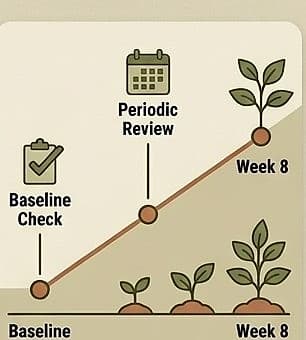
Tracking progress is the direct, practical application of the trajectory concept introduced in Module 1.6, applied at the level of individual documented goals and behaviors rather than overall development.
Consistent tracking requires two things working together: a stable measurement method (using the same definition and the same way of counting a target behavior or skill every time, so that comparisons across sessions are meaningful) and consistent frequency (measuring often enough to actually see a trend, rather than only checking in sporadically). If you measure a goal differently -- or define the target behavior slightly differently -- from one session to the next, you lose the ability to know whether an apparent change reflects real progress or just a change in how you were measuring.
A simple, reliable practice is to maintain a running log for each active goal: date, the specific measurement for that session (e.g. "4 of 5 opportunities," or "cried for a total of 3 minutes across the session"), and any relevant context (e.g. illness, a schedule disruption, a new environment) that might explain an unusual data point without it being mistaken for a genuine trend change.
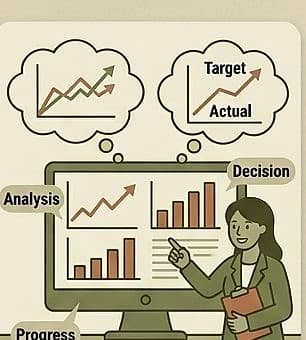
When reviewing tracked data over time, look at the overall trend rather than any single session in isolation -- a single "bad" session in an otherwise improving trend is normal variability, not evidence the intervention has failed, just as a single "great" session in an otherwise flat trend is not yet proof of a breakthrough. This is the same "widening gap versus steady progress versus plateau" thinking introduced in Module 1.6, now applied at the level of a specific tracked skill.
Progress tracking also directly informs clinical decision-making: a flat or worsening trend over a reasonable period (rather than a single session) is a signal to revisit the intervention itself -- perhaps the goal's target skill was miscalculated, the strategy isn't well matched to the child's current level, or the actual function of a behavior (Module 2.4) was misidentified -- rather than simply continuing to do the same thing and hoping for a different result.
Practical takeaway: Keep tracked data in the same consistent format across every session for a given goal, and review trends over multiple data points, not single sessions, before concluding an intervention is or isn't working.
This guide is general information, not a diagnosis or medical advice. If you're worried about your child, the next step is a conversation with a qualified therapist.
Keep reading

More for your practice
Structured courses with completion tracking live in your therapist dashboard.