
5.8 Turning Clinical Information into Parent-Friendly Language
5 min read
The final skill in this course ties directly back to Module 4: the clinical documentation you produce is not only an internal record -- much of it eventually needs to be translated into something a caregiver, who has no clinical training, can genuinely understand and use.
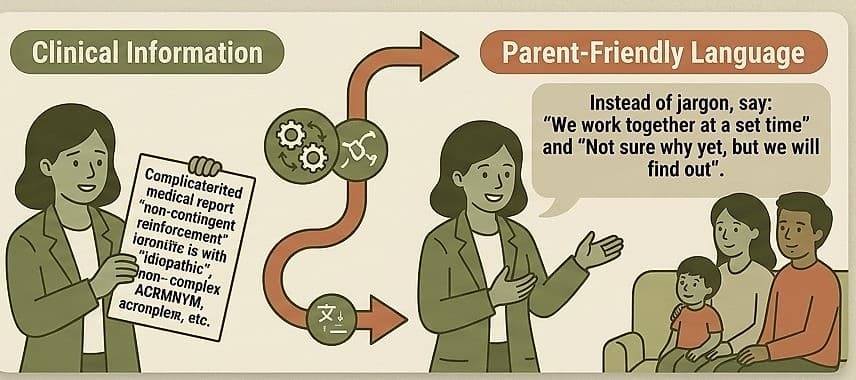
The core principle is the same one introduced in Module 4.2: translate, don't just simplify. A parent-friendly summary should preserve the accurate substance of the clinical finding while replacing jargon with everyday language and replacing abstract clinical framing with concrete, relatable description. "Client demonstrated escape-maintained behavior during non-preferred task demands" might become, in a parent-friendly summary: "When Malik is asked to do something he finds difficult or boring, he's learned that having a big reaction sometimes gets him out of it -- so part of our plan is teaching him a better way to ask for a short break instead."
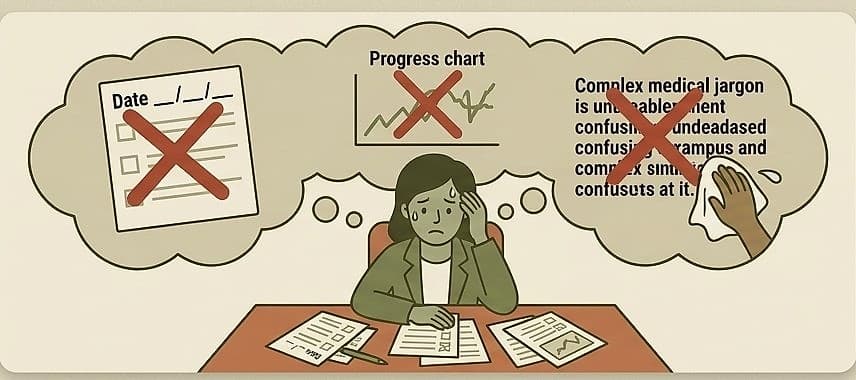
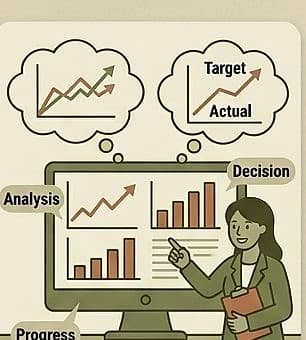
Visual tools are especially valuable here, connecting to Module 5.6: a simple progress graph, even a hand-drawn or simplified one, often communicates a trend to a caregiver far more effectively than paragraphs of clinical narrative, especially for caregivers who may find dense written reports overwhelming or intimidating.
When converting a full clinical note or report into a family-facing summary, prioritize ruthlessly. Rather than translating every clinical detail, identify the two or three points that matter most for the caregiver to understand and act on this week, and lead with those -- additional detail can be layered in over subsequent conversations (directly applying the "don't front-load everything" principle from Module 4.2).
It is also worth explicitly connecting findings to action whenever you translate them for families: a parent-friendly summary is most useful when it doesn't just describe what was observed, but tells the caregiver what they can specifically do about it -- a home strategy to try, a specific thing to watch for, or a clear next appointment or referral step. Documentation that stays purely descriptive, even when translated into simple language, misses the chance to actually support the caregiver's role as an active partner in the child's progress (Module 4.8).
Practical takeaway: For every clinical report you produce, draft a short, separate parent-facing summary in plain language, prioritizing the two or three most important points and always ending with a specific, actionable next step -- never assume the clinical version alone will be understood as intended.
This closes Hayven's five-module therapist training curriculum. Module 1 gave you the map of typical development; Module 2 gave you the lens to understand behavior scientifically rather than through labels; Module 3 gave you the structure to gather information about a child fairly and systematically; Module 4 gave you the relationship skills that determine whether your clinical work actually reaches the child's daily life; and Module 5 gave you the documentation discipline that ties all of it together into a record that helps the child over time, not just in a single session. Come back to these modules whenever a situation feels unfamiliar -- most challenges new therapists encounter map onto one of these five frameworks.
Module 5 references: NCBI Bookshelf (StatPearls), "SOAP Notes" (ncbi.nlm.nih.gov/books/NBK482263/); Mentalyc, "How to Write SMART Goals in Therapy (With Clinical Examples)" (mentalyc.com/blog/smart-goal-in-therapy); Mentalyc, "Common Mistakes Therapists Make in Progress Notes" (mentalyc.com/blog/common-progress-notes-mistakes); PowerBack Pediatrics, "A Parent's Guide To Understanding ABA Progress Graphs" (powerbackpediatrics.com/blog-posts/a-parents-guide-to-understanding-aba-progress-graphs).
This guide is general information, not a diagnosis or medical advice. If you're worried about your child, the next step is a conversation with a qualified therapist.
Keep reading
More for your practice
Structured courses with completion tracking live in your therapist dashboard.