
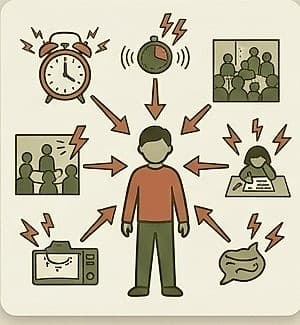
A trigger is simply a specific type of antecedent -- the particular event, demand, or condition that reliably comes before a behavior of interest. Identifying triggers is really about looking for patterns across many ABC data points rather than relying on any single observation.
Triggers generally fall into a few broad categories, and it's useful to check each one systematically. Task-related triggers: the behavior tends to follow being asked to do something difficult, boring, or non-preferred (e.g. transitioning away from a favorite toy, being asked to sit still, being given multi-step instructions). Social triggers: the behavior follows a specific social event, such as being denied attention, being teased, having a toy taken, or being placed in an unfamiliar social situation.
Sensory or physiological triggers: the behavior follows loud noise, bright lights, physical discomfort, hunger, or fatigue -- internal or environmental states rather than a specific external demand. Setting events: broader background conditions that make a trigger more potent even though they are not the immediate antecedent -- for example, a child who slept poorly the night before may be far more likely to have a meltdown over a minor transition the next morning than they would on a well-rested day.
The key clinical skill is distinguishing the immediate trigger from the setting event that made the child more vulnerable to that trigger. Two children can react completely differently to the exact same immediate antecedent (being told "five more minutes, then clean-up time") depending on their setting events -- one calmly complies, the other melts down, because they are hungry, overstimulated, or already dysregulated from an earlier event that day.
To reliably identify triggers, look across your collected ABC data and ask: what is common across most or all instances of this behavior? Is it always preceded by a specific type of demand? Does it happen more often at a specific time of day? Is it more likely with a specific person present, or absent? Documenting several instances and literally lining up the antecedent column across all of them is often the fastest way to spot the pattern, because a trigger that isn't obvious in any single instance often becomes obvious once you see five or six side by side.
Practical takeaway: Never conclude a trigger from a single episode. Collect at least several data points across different times, settings, and people before you commit to a trigger hypothesis, and stay open to setting events (hunger, fatigue, illness) that make a child more reactive to an otherwise ordinary antecedent.
This guide is general information, not a diagnosis or medical advice. If you're worried about your child, the next step is a conversation with a qualified therapist.
Keep reading
More for your practice
Structured courses with completion tracking live in your therapist dashboard.