
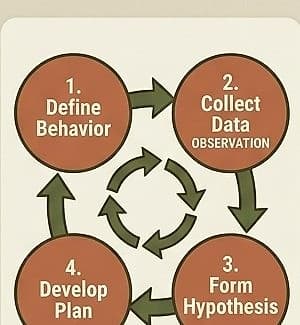
A Functional Behavior Assessment (FBA) is the formal process that ties everything in this module together -- it is a structured method for figuring out the function of a specific, significant behavior so that an effective, individualized intervention plan can be built. An FBA is typically used for behaviors that are frequent, intense, or interfering enough with learning, safety, or relationships that informal observation is not sufficient.
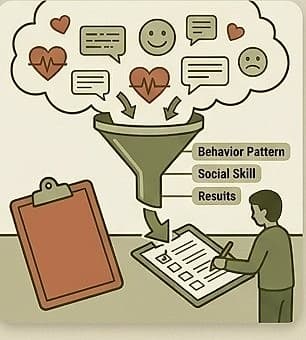
According to the IRIS Center's training modules, a full FBA usually combines several types of information rather than relying on just one (IRIS Center, "Descriptive Assessments" and related FBA modules). Indirect assessment: interviews and rating scales completed by people who know the child well (parents, teachers, prior therapists), gathering their perspective on when, where, and how often the behavior occurs, and what they believe triggers or maintains it.
Descriptive (direct observation) assessment: systematically watching the child in their natural setting and recording ABC data across multiple occasions, ideally by an observer who is not also responsible for managing the classroom or session at that moment, so the data reflects real, undisturbed conditions. Functional analysis (more advanced): deliberately manipulating specific antecedents and consequences in a controlled way to directly test a hypothesis about function. This is a more specialized technique typically conducted by a Board Certified Behavior Analyst (BCBA) or similarly trained professional, and new therapists are not usually expected to run this independently -- but you should recognize when a case is complex enough to warrant referring for one.
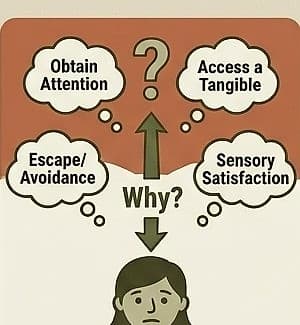
The output of an FBA is a hypothesis statement, something like: "When Maya is asked to complete a non-preferred task in a group setting, she is likely to protest loudly, which is followed by removal from the task; therefore, the protesting behavior likely serves an escape function." Multiple sources of information (interview, direct observation, and if available, functional analysis) should agree, or "triangulate," before you feel confident in this hypothesis -- a single data source is a lead, not a conclusion.
Once a solid hypothesis exists, it becomes the foundation for a Behavior Intervention Plan (BIP): a plan built around adjusting antecedents (to reduce triggers), and teaching and reinforcing a replacement behavior that serves the same function in a more appropriate way (for example, teaching a child to ask for a break instead of screaming to escape a task).
Practical takeaway: Even as a new therapist not yet trained to run a full functional analysis, you can meaningfully contribute to an FBA by collecting careful, consistent ABC data and by conducting or contributing to caregiver interviews -- these are often the most time-consuming and highest-value parts of the process.
This guide is general information, not a diagnosis or medical advice. If you're worried about your child, the next step is a conversation with a qualified therapist.
Keep reading
More for your practice
Structured courses with completion tracking live in your therapist dashboard.