
When a session doesn't happen: cancellations and no-shows on Hayven
4 min read
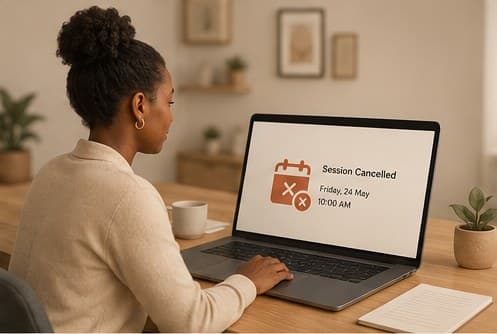
Either you or the parent can cancel a confirmed or pending-payment booking up until the session's scheduled start time, and that cancellation is recorded with a reason. It's worth knowing, though, that this is where the platform's automation currently stops: cancelling a paid booking doesn't itself trigger a refund.
If a parent needs a refund after a cancellation, that's handled by Hayven's team directly rather than automatically, so if a family raises it with you, the honest and useful answer is to point them to reach out to Hayven about the refund specifically, rather than promising something the platform doesn't yet do on its own.
A genuine no-show (the family simply doesn't turn up, with no cancellation) doesn't currently get flagged as anything distinct from a completed session: once a confirmed session's scheduled time passes, it moves to completed automatically regardless of whether it actually happened. This means the platform itself won't separately surface a pattern of no-shows for you; if it's happening repeatedly with a specific family, that's worth tracking yourself and raising with your supervisor.
Since there's no automatic no-show flag, your session notes are doing real work here: noting plainly that a session didn't occur and why (if known) keeps an accurate record even though the system status won't reflect it distinctly. This matters more than it might seem if the pattern continues and becomes worth a direct conversation with the family or your supervisor.
For a late cancellation that isn't quite a no-show, a brief, direct message to the family acknowledging it and confirming the next session tends to do more for the working relationship than letting it pass unaddressed. Most families aren't trying to be difficult; a short, non-judgmental check-in usually surfaces whatever's actually going on.
This guide is general information, not a diagnosis or medical advice. If you're worried about your child, the next step is a conversation with a qualified therapist.
Keep reading

More for your practice
Structured courses with completion tracking live in your therapist dashboard.