
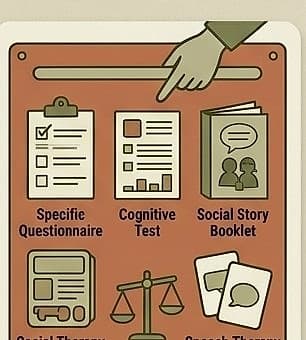
Not every concern calls for the same tool, and using the wrong tool -- even a good one -- for the wrong question wastes time and can produce misleading results. Tool selection starts with the referral question (Module 3.1): a concern about possible autism calls for different tools than a concern about a specific learning difficulty, which calls for different tools again than a general developmental screening.
Broadly, assessment tools fall into a few categories, and it helps to know what each is, and isn't, good for. Broadband developmental screeners (general developmental screening questionnaires completed by caregivers) are quick, low-cost, and good at flagging whether a concern exists across major domains -- but they are not diagnostic and are not designed to tell you what the specific condition is. Domain-specific or condition-specific screeners (e.g. autism-specific screening tools) are more targeted and useful once a broadband screener or clinical concern points in a particular direction.
Comprehensive/diagnostic assessment batteries, often involving standardized cognitive, language, academic, and social-emotional testing, are more time-intensive and typically administered by professionals with specific training and credentialing in those instruments. According to Yale Medicine's description of pediatric psychological assessment, a comprehensive evaluation typically combines caregiver interview, one-on-one testing of cognitive/academic/social-emotional functioning, and sometimes neuropsychological measures of attention, memory, and executive functioning (Yale Medicine, "Pediatric Psychological Assessment"). Rating scales and questionnaires completed by parents and/or teachers provide a structured way to compare a child's behavior across raters and settings, which is valuable precisely because cross-setting consistency is clinically meaningful.
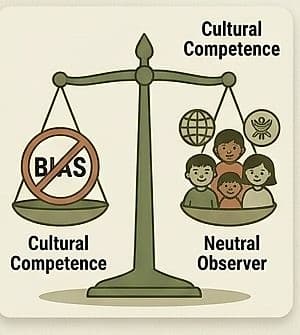
When selecting a tool, always check that it is standardized and validated for the child's age and, where relevant, their language and cultural background -- a tool normed on one population can produce misleading results when applied outside that population without adjustment. Also check that you (or your supervising clinician) are qualified and, where required, credentialed to administer and interpret the specific tool -- some instruments require formal training, and using them without that training can produce invalid or unreliable results, and in some cases violates professional and ethical guidelines.
As a new therapist, your role in tool selection may initially be more about recognizing which category of tool a situation calls for and flagging that clearly to a supervisor, rather than independently choosing and administering advanced diagnostic instruments.
Practical takeaway: Match the tool to the referral question, not the other way around -- never select a tool first and then look for a question it can answer. Always verify a tool is validated for the specific child's age, language, and cultural context.
This guide is general information, not a diagnosis or medical advice. If you're worried about your child, the next step is a conversation with a qualified therapist.
Keep reading


More for your practice
Structured courses with completion tracking live in your therapist dashboard.