
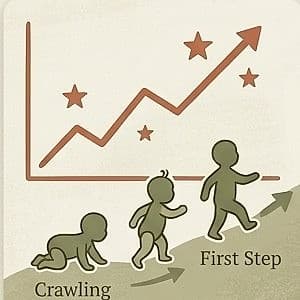
This is the first topic in Module 1 of Hayven's therapist training curriculum, Understanding Child Development. The goal of this module is to give you a strong foundation for recognizing typical and atypical development; by the end of it, you should be able to identify developmental concerns and understand when further assessment may be appropriate.
A developmental milestone is a skill or behavior that most children can do by a certain age -- things like smiling at people, sitting without support, saying a first word, or sharing with a friend. Milestones are grouped into broad areas of development, often called domains: social-emotional, language/communication, cognitive (learning, thinking, problem-solving), and movement/physical development.
The most widely used milestone framework in the United States comes from the Centers for Disease Control and Prevention (CDC), through its "Learn the Signs. Act Early." program. The CDC organizes milestones around key checkpoints -- 2, 4, 6, and 9 months; 1 year and 15 months; 18 months; 2 years; 30 months; and 3, 4, and 5 years -- with a specific, observable list of what most children can do by each age. For example, most 2-year-olds can point to things when they are named, say at least two-word phrases, and kick a ball. Most 4-year-olds can tell a simple story, catch a large ball most of the time, and pretend to be something else during play (CDC, "Learn the Signs. Act Early.").
Milestones are a guide, not a rigid rulebook -- but they matter clinically because they give you a shared, observable language. Instead of saying "he seems behind," you can say "he is not yet combining two words at 24 months," which is specific, checkable, and comparable to a known benchmark.
The CDC also recommends formal developmental screening -- using a standardized, validated tool, not just observation -- at 9, 18, and 30 months, plus autism-specific screening at 18 and 24 months, or any time a parent or provider has a concern. Milestone checklists help you notice something might be off, but a validated screening tool is what confirms it and starts the referral process.
Practical takeaway: Learn the milestone checklists for the age ranges you work with by heart. When you observe a child, mentally check off which milestones are present, emerging, or absent -- this is the raw material for every later assessment step.
This guide is general information, not a diagnosis or medical advice. If you're worried about your child, the next step is a conversation with a qualified therapist.
Keep reading



More for your practice
Structured courses with completion tracking live in your therapist dashboard.