

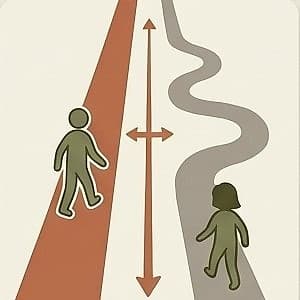
Development does not happen in a vacuum -- it happens inside a family, a community, and a culture, and all three shape what "normal" looks like. A therapist who applies one cultural yardstick to every child risks misreading healthy variation as a deficit.
Culture influences development in several concrete ways. It shapes which skills are emphasized and practiced early (for example, some cultures place a strong early emphasis on independent self-feeding and dressing, while others emphasize communal caregiving and interdependence for longer); it shapes communication style (eye contact, turn-taking in conversation, and even how much a child is expected to speak around adults vary by culture, and none of these are inherently "wrong"); and it shapes play and discipline norms, which affect how social-emotional milestones present themselves (Maryville University, "Cultural Influences on Child Development"; Bournemouth University / The Conversation, "How culture influences children's development").
Environment matters just as much as culture, and the two often overlap. Socioeconomic factors such as access to nutritious food, stable housing, quality early childhood education, and reduced exposure to chronic stress or trauma all measurably affect brain development, language exposure (the well-documented "word gap" between children who hear a high versus low volume of adult words in early childhood), and school readiness.
Bilingual or multilingual home environments are an environmental factor that is frequently -- and incorrectly -- treated as a red flag. Research broadly supports that being raised bilingual does not cause language delay; children may show smaller vocabularies in each individual language during preschool years, but their combined vocabulary across both languages is typically comparable to monolingual peers.
For a therapist, the clinical implication is to always ask about a child's cultural and home context before forming an opinion about whether a behavior is atypical. Questions worth asking during intake include: what language(s) are spoken at home, and how much exposure does the child have to each? What are the family's expectations and norms about independence, eye contact, and communication with adults? What is the child's day-to-day environment like -- who are the primary caregivers, and what does a typical day look like? A behavior that looks unusual out of context (for example, a child who avoids direct eye contact with adults) may be a completely normal expression of a specific cultural norm of respect, or it may be a genuine red flag -- and you cannot tell the difference without asking.
Practical takeaway: Build a habit of asking about cultural and environmental context as a standard part of every intake, not as an afterthought when something looks "off." This single habit prevents a large share of assessment bias before it starts (this theme is expanded further in Module 3).
This guide is general information, not a diagnosis or medical advice. If you're worried about your child, the next step is a conversation with a qualified therapist.
Keep reading

More for your practice
Structured courses with completion tracking live in your therapist dashboard.