
Early signs of autism spectrum differences, explained without the jargon
8 min read
Autism looks different in every child, so there's no single sign that confirms or rules it out. What actually helps is knowing which patterns are worth a conversation with a specialist, not as a checklist for diagnosing at home, but as a way to trust what you're noticing.
By 12 months: limited or no response to their name being called, little to no pointing or waving, and not sharing enjoyment by looking back and forth between you and something interesting (what's called joint attention).
By 18-24 months: not yet combining words in the way you'd expect for their age, repeating words or phrases without using them to communicate (echolalia), strong preference for lining up or ordering objects over pretend play, and noticeably intense reactions to changes in routine.
At any age: differences in eye contact that feel consistent rather than occasional, repetitive movements (hand-flapping, rocking, spinning), and a narrow, intense focus on specific topics or objects.
None of these individually mean anything definitive: plenty of typically developing children show one or two at some point. What matters more is a cluster of several, persisting over time, and noticeably affecting how your child plays, communicates, or connects with others.
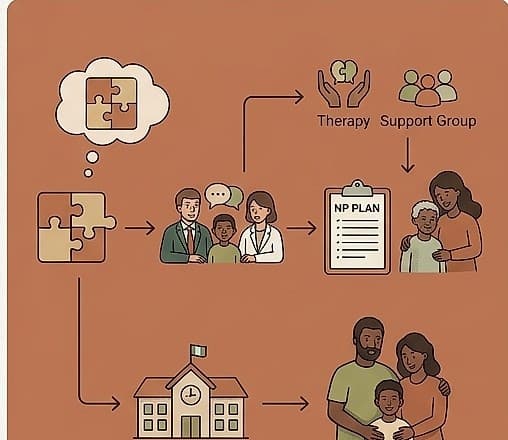
If a few of these sound familiar, the next step is a developmental screening, not a label. A specialist can tell you whether what you're seeing warrants a fuller evaluation, and if it's autism, an earlier conversation means earlier support, which is consistently linked to better outcomes. It's never too early to ask, and asking doesn't commit you to anything except more information.
This guide is general information, not a diagnosis or medical advice. If you're worried about your child, the next step is a conversation with a qualified therapist.
Keep reading
Ready to have someone look with you?
Book a verified therapist in Lagos, or take the 2-minute matching quiz to find the right fit.