
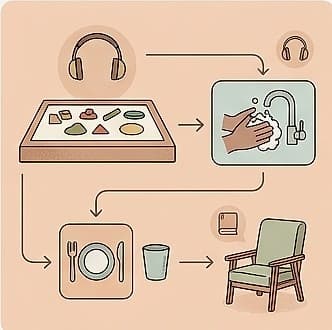
A lot of sensory support gets framed around expensive equipment, weighted blankets, therapy swings, sensory rooms, which can make it feel out of reach. Most of what actually helps day to day costs nothing: it's about noticing patterns and adjusting the ordinary parts of your routine around them.
Start by tracking, not fixing. For a week, jot down (even just mentally) what was happening right before a meltdown or shutdown: the time of day, the environment, what had just changed. Patterns usually emerge faster than expected, a specific time of day, a specific transition, a specific texture or sound, and you can't adjust for a trigger you haven't identified yet.
Protect transitions specifically. Moving from one activity to another is one of the most common sensory flashpoints, because it demands the brain reorient all at once. A five-minute warning before a transition, a visual or auditory cue that a change is coming ("two more minutes, then bath time"), gives the nervous system time to prepare rather than being asked to switch instantly.
Build in a predictable "reset" spot: a specific corner, cushion, or quiet space your child can go to when things feel like too much, that isn't associated with being in trouble. The value isn't the physical space itself, it's the predictability of having somewhere to go before things escalate, rather than only reacting once they have.
Adjust the environment before adjusting the child. If bath time is consistently hard, it's often worth changing the water temperature, the lighting, or the specific soap before assuming the child needs to "get used to it." Sensory sensitivities are usually real physiological responses, not preferences to be trained away.
None of this replaces an occupational therapist who specializes in sensory processing, who can identify your child's specific sensory profile far more precisely than home observation alone. But a calmer home routine makes whatever they're working on in session easier to reinforce the other six days of the week.
This guide is general information, not a diagnosis or medical advice. If you're worried about your child, the next step is a conversation with a qualified therapist.
Keep reading



Ready to have someone look with you?
Book a verified therapist in Lagos, or take the 2-minute matching quiz to find the right fit.